1.0 — Intuitive Interaction
Robotic modulation, face tracking, ferropixels.
Artistic research project
Immersive installations investigating how human perception, material behavior, and machine intelligence can co-produce spatial experience.
Research premise
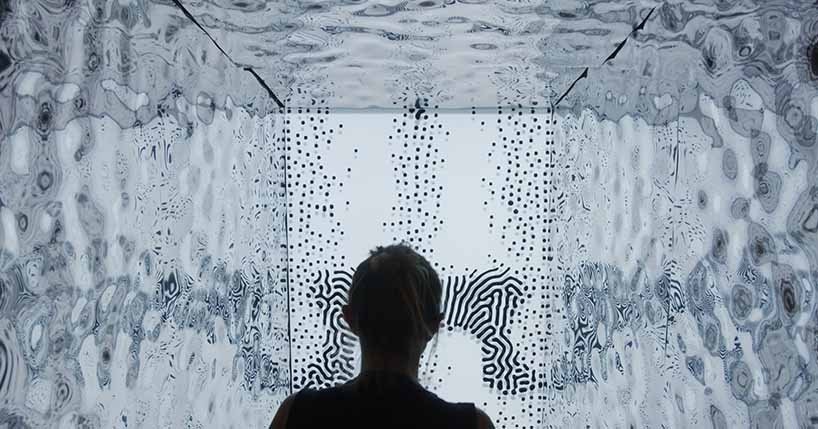
Proteus is an evolving artistic research project in which ferrofluid, digitized matter, gaze, neural interfaces, and responsive systems become media for exploring co-modulation. The project treats installation not as a neutral container, but as a spatial instrument in which bodies, computational processes, and material transformation shape one another.

Chapter I
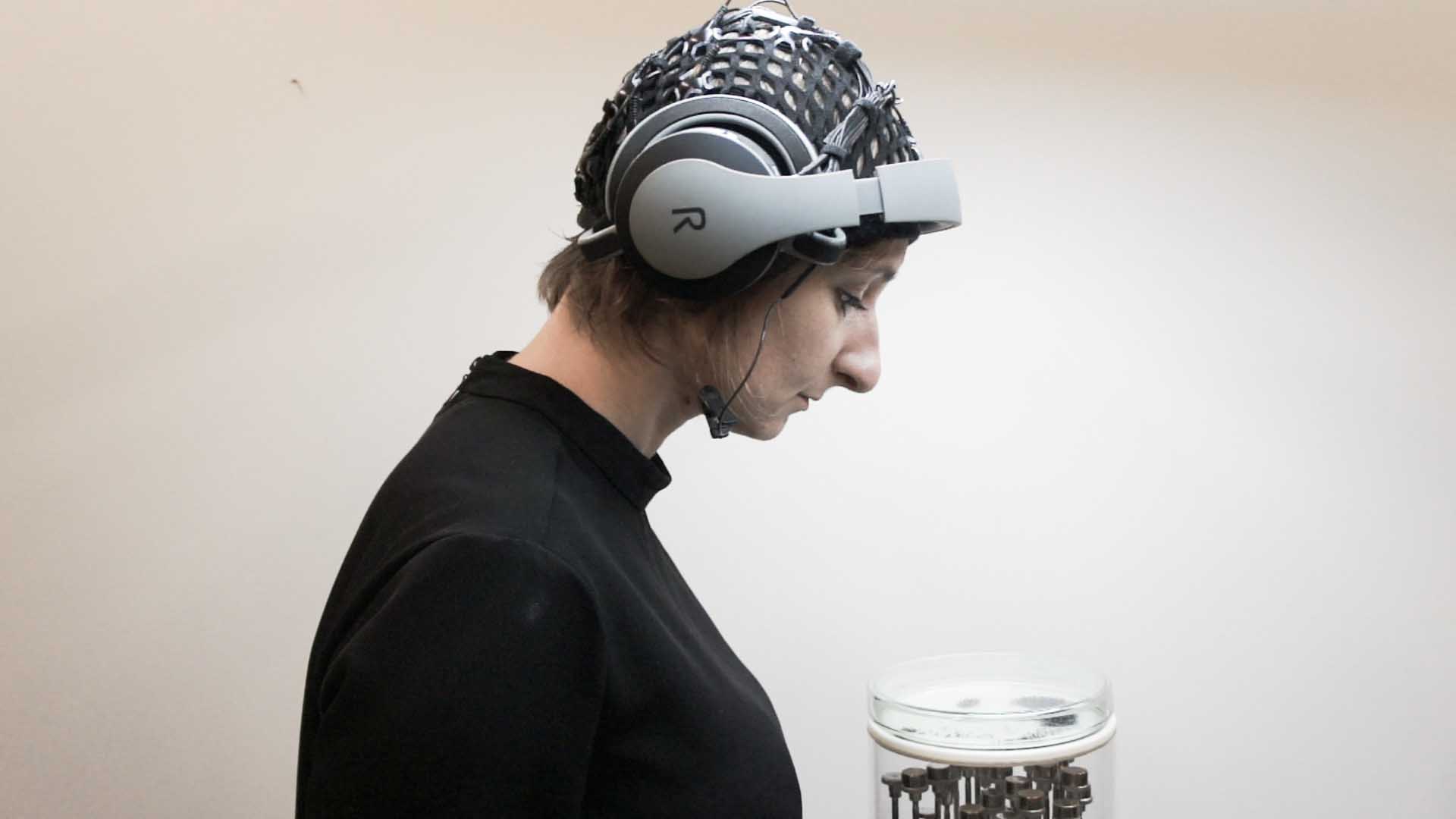
Attention, gaze, neural activity, and embodied presence are not inputs to a system from outside. They are part of the work’s material logic.
Across the series, interaction shifts away from explicit control toward more implicit, perceptual, and bodily forms of participation. Proteus asks how a human presence can modulate responsive matter and how immersive encounters can make cognition, concentration, and uncertainty spatially perceptible.
Chapter II
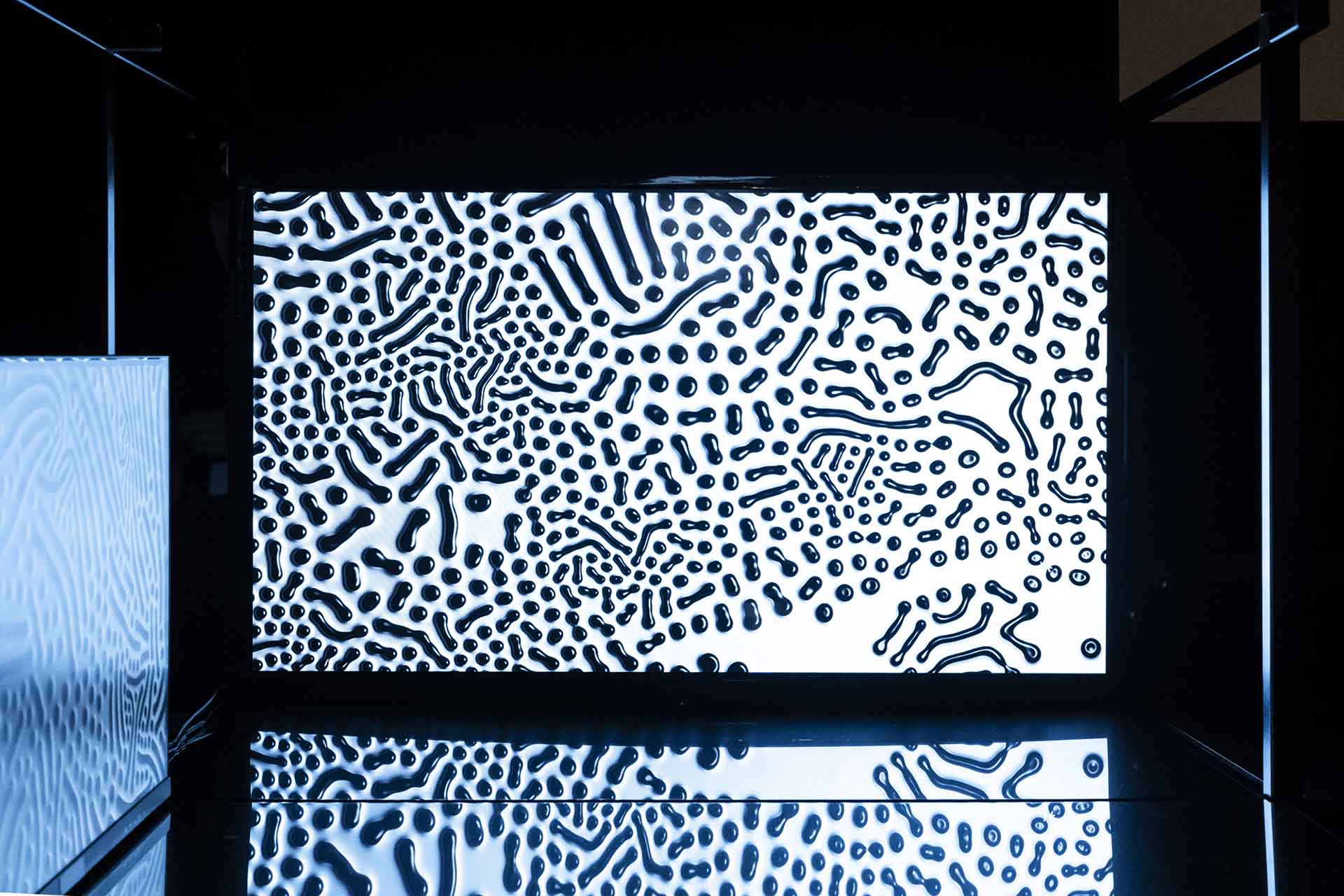
Ferrofluid and its digital surrogates are treated as living, unstable, and expressive matter.
The project moves between physical ferrofluid, digitized ferromaterial, reaction-diffusion simulation, and machine-mediated transformation. Its visual field is defined by clustering, drift, attraction, tension, and emergent patterning — not as illustration, but as a medium of inquiry into material intelligence and liveness.



Chapter III
Proteus is not only viewed. It is encountered as an environment of reflection, orientation, scale, and distributed presence.
From portal-like immersive settings to modular arrays of screens and mirrors, the installations stage interactions across physical and networked space. Spatiality is not secondary documentation here; it is one of the core research dimensions of the project.
Evolution
Robotic modulation, face tracking, ferropixels.
Closed-loop modulation between human attention and machine learning.
Further fabrication and exhibition development.
Reaction-diffusion and reinforcement learning as surrogate material behavior.
BCI, distributed interaction, modular spatial staging, networked participation.


Contact